


dúchas, m. (gs. -ais). 1. Hereditary right or claim; birthright, heritage
Dia dhuit a chairde,
Today I am sharing something a little bit different to what I usually write about. With the passing of beloved Irish man Manchán Magan a couple of weeks ago, I have been thinking of ways I can incorporate the use of the Irish language into my own writing (and everyday life) and I would like to invite you into this practice with me.
Manchán was a writer and documentary-maker but more than that, he was an Irish man deeply enamoured with and tied to the land from which he came. His passion for the Irish language and in how that language connected us to the spiritual world, our ancestors and the land was something beautiful to behold. It was obvious to me and I am sure many others that he was a man living his purpose on this earth. He brought an element of fun and magic with a sprinkling of mischief to learning the Irish language, that if I had a teacher like him growing up would of made me excited to learn. Listening to him speak is like being transported back in time, sitting around a campfire with the very ancestors he talks of, with nothing but each other, our stories and a sky full of réaltaí (stars).
There have been outpourings of love and tributes for Manchán across different generations and backgrounds. It shows how many peoples lives he touched and inspired. This is an excerpt from a tribute by our president Michael D Higgins:
“Through his work, Machán inspired so many people, across every generation, to engage more deeply with our native language, its cultural richness, and through it to engage with, respect and learn from our natural landscape and environment,”.
He was a self-described 'oddball loner’, and spoke of being not of this world. I love this, because many can relate. You can find a wonderful article about that here: Manchán Magan on his cancer: ‘Death is something I’ve always been very comfortable with’
His authentic passion and wonder for what he did shone through, and I think this is why so many people loved and admired him. With Machán’s openness about his search for something more, and in his connection to the spiritual world it has given somewhat of a permission to be so openly talking about this stuff, the feeling we can’t always put words to when we walk among the land. Our ancestors did put words to these things, and that is what he has shown us and what a gift it is.
I thought it would be a wonderful way to honour not only his legacy, but our own history, by drawing from his teachings and finding our own inspiration. Many of us have forgotten most of the Irish we learned in school, and therefore might we feel we do not have the credentials to do this! But I want to remind you and myself that this is our dúchas, our birthright. If you are not Irish and feel drawn to Ireland and the language/history, I want you to know that you are most welcome to join in this.
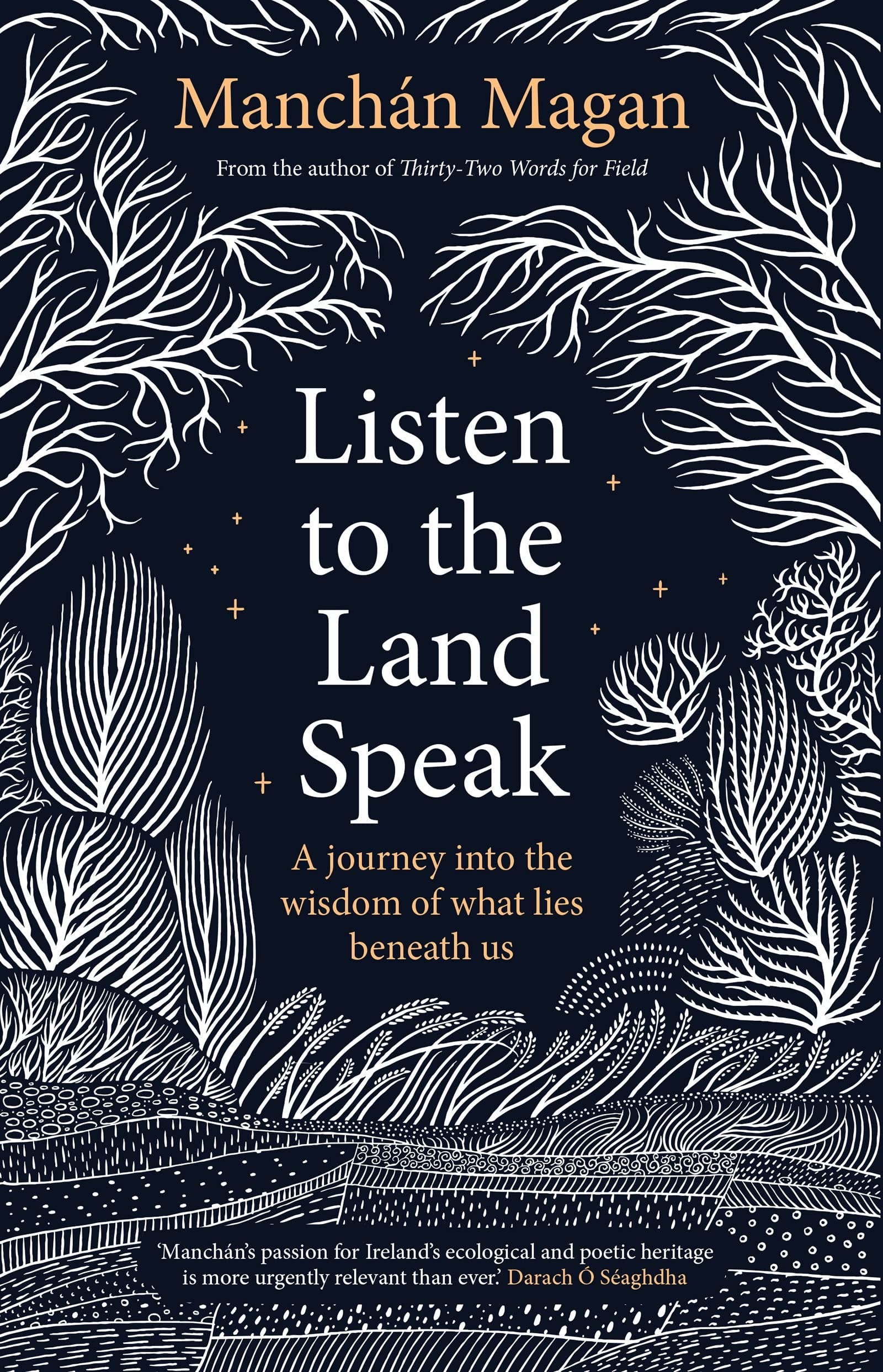
I have also bought and began reading Mancháns books “listen to the land speak” which I would highly recommend, especially as the darker evenings draw close to add an element of magic to your evenings.
Lets begin:
We are about to venture into the foggy land of folklore and fairytales, and my hope for you is that you allow each word or phrase lead you where it wants to go.
for this exercise you might want to get yourself cosy, light some candles/sit by the fire, grab yourself a cupán tae a pen and some paper. Maybe even put on some of your favourite Irish music.
I thought it would be fun to immerse ourselves into the language in a creative way. Whatever comes to mind when you read each word or speak it aloud - write it down. Feel the inspiration and follow it. I hope you enjoy.
Iarmhaireacht (ear-var-oct)
I thought it would only be right to begin with one of Machán’s favourite words which translates to “the lonesomeness at early morning/dawn” and another translation which says “the loneliness felt at cockcrow”.
Scímh (sceeve)
This word like many Irish words, has more than one meaning and each more poetic that the last. It can mean “a thin sprinkling of tiny bits of dust” or “a flower on the table” or “fairy mist that covers the land in the early morning” or “a magical vision” or last but not least “succumbing to the supernatural world through sleep.
Sí Gaoithe (she gwee-heh)
This is a personal favourite of mine. It means “a gust of wind”, but can also mean “a fairy wind” as sí means gale and fairy. I like to imagine this is how our lady ancestors might of referred to their own farts.
In irish we also refer to her as “sí”, so I think that is really lovely.
This phrase inspired me to begin a poem called “sí an tí”, as oppose to “bean an tí” which means woman of the house- I would like to be referred to as the fairy of the house from now on thank you very much!
Tóg go bog é (toe-go-bug-ay)
This phrase literally translates to “take it soft/gently” and generally means “take it easy”. I love it because it just rolls off the tongue, and one we can easily say when we end an encounter, phone call or text message. It’s one I really want to start incorporating into my day to day life!
Níl aon tinteán mar do thinteán féin (kneel ayn tintawn mar duh hint awn fane)
This is an Irish proverb or seanfhocal that literally translates to “there is no hearth like your own hearth” or “there is no place like home”
Tuaim
This is one I found on Ye Vagabonds instagram page under a tribute to Manchán. The caption read “I got this word from Manchán a few years ago. It’s a word for the sounds that occur in nature, like the sound of the sea, or of the trees and birds”
So beautiful- is there anything that compares to this sound?
Is maith an scéalaí an aimsir
This old Irish proverb translates to “weather is a good storyteller” or “time will tell”. I love how almost everything in the irish languages ties in some way to the land and elements, as this is mostly how people communicated- in direct communication to the land.
Anam Cara
Another personal favourite, this means “soul friend” and can refer to a lover or a dear friend.
There is a book of this name by Irish writer and poet John O’Donohue that is next on my reading list.
Tír na nóg (tear-nu-noge)
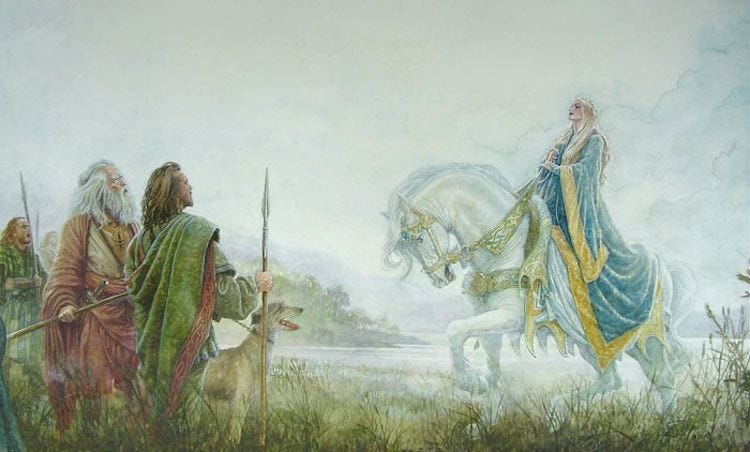
You may of heard of this story, especially if you grew up in Ireland. It means “the land of eternal youth”. It is a mythological place, a paradise where nobody ages. For me, it creates all sorts of imagery - now I read this story to my daughter and it brings me back to my own youth and the magical feeling of endless possibilities, or magical realms.
I will leave it here today, and will leave you with this quote from Manchán :
“Myths are beyond reason, beyond thinking”
I hope you can get some inspiration for your own writing, and day to day life with these words and phrases. I would love to make this a series, so if you want to follow along for more then please do.
I will also leave you with this beautiful poem I heard over the weekend by Noelle Lynskey, where she blends English and the use of Irish together so powerfully:
Thank you for reading,
Go raibh míle (A million thank you’s)
grá mór, (big love)
Ciara
-Some sources used for this Article:
manchanmagan on instagram
deepeningthesenses on instagram
The Irish Times
The two johnnies podcast (interview with Manchán)
Hey Ciara. Your post really drew me in. I'm not Irish and yet have always felt drawn to the Emerald Isle. I visited a few years ago and had some magical experiences...truly magical!
Also, as I read the language in your post, it felt like Home.
I was chatting to a fellow Substacker a while ago and I found myself telling her that I had been given my Soul Name by Spirit some years ago...Raven Explorer (feminine) and Wind Fire (masculine) in the Twin Soul.
She was very strong that I should ask spirit what the names were in their origin language and it came through quickly...
'Anama Nunktikah Wahwae Foh'...not sure if I spelt it right...this was how it sounded.
I wondered if it was Sanskrit, now I'm wondering if it's Irish?💜💜💜